Stem Cell Donation
After everything you’ve gone through being contacted, tested, prepared, and supported the day of your donation arrives. For many donors, this is a meaningful and emotional moment. It’s the point where your decision becomes action, and where you are directly giving someone a second chance at life. While it may feel like a big moment, the procedure itself is carefully managed, safe, and guided by experienced medical professionals.

How the donation works
In South Africa, stem cell donation is done through a process called peripheral blood stem cell collection (PBSC). This is not surgery.
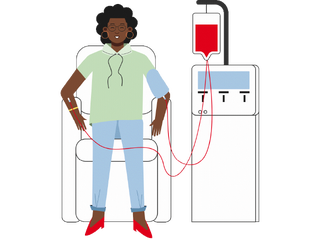
You will be lying comfortably on a hospital bed while a small tube is placed into a vein in each arm. Your blood flows from one arm into a machine that separates out the stem cells. The remaining blood is then returned to your body through the other arm. This process is known as apheresis.
The donation usually takes between four and six hours. During this time:
- you will be awake and monitored by a specialised medical team
- you can relax, watch something, listen to music, or rest
- your comfort and wellbeing are continuously checked
What you might feel
Most donors do not experience pain during the procedure itself. You may feel:
- slight discomfort from the needles
- a feeling of coldness or tingling during the process
- some tiredness
These sensations are temporary and managed by the medical team. Side effects from the preparation (such as body aches from G-CSF) usually begin to ease shortly after the donation. Once the procedure is complete, you will be monitored until you are ready to go home.
Your recovery
Recovery after donation is typically fast. Most donors return to their normal daily activities within a few days. If your routine involves physical activity, you may need a little more time to fully recover. Your body naturally replaces the donated stem cells within a few weeks, and your immune system remains intact.
While the procedure itself may feel straightforward, its impact is anything but. Somewhere in the world, a patient is receiving the stem cells your body has produced; giving them the opportunity to rebuild their immune system and begin their recovery.
What you have done is extraordinary, even if it doesn’t feel that way in the moment.


Your Stem cell donation
Most donors report little to no pain during the procedure. Any discomfort is usually mild and temporary.
Yes. Peripheral blood stem cell donation is a well-established and safe procedure, monitored by trained medical professionals.
Your blood is drawn from one arm, passed through a machine that collects stem cells, and returned to your body through the other arm.
No. Your body naturally replaces the donated stem cells within a few weeks.