
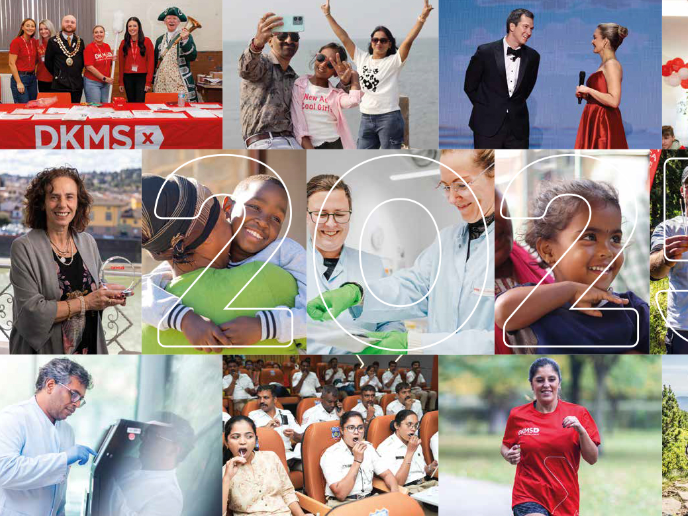
DKMS Africa's 2025 impact: More than 60 000 new potential donors and stronger support for patients
A large registry is important but the diversity of registered potential donors is equally critical. Stem cell matching is based on inherited tissue characteristics known as human leukocyte antigen or HLA, markers. Patients are therefore more likely to find suitable matches among people with similar genetic ancestry.
By the end of 2025, DKMS Africa's registered potential donor base was 73% Black, 18% White, 5% Coloured and 4% Asian or Indian. Women represented 66% of those registered, while men accounted for 34%. Although this reflects progress, continued recruitment across South Africa's diverse communities remains essential to improving patients' chances of finding suitable matches.
Meeting people where they are
DKMS Africa expanded its reach by taking stem cell donor education and registration into cultural, sporting and professional spaces. Activities at events such as the Comrades Marathon, Cape Town Marathon Expo, Senatla Sevens, the Loeries Awards and Cape Town Pride allowed the organisation to engage new audiences and make donor registration more accessible.
At Cape Town Pride, one person who registered was later identified as a potential match for a patient, demonstrating how community-based awareness can contribute directly to the search for suitable donors.
Strengthening access to treatment
DKMS Africa's work extends beyond donor recruitment. Finding a suitable donor is an important step, but patients may still face barriers related to diagnosis, referral, specialist care, funding and transplant infrastructure. In 2025, DKMS awarded a special John Hansen Research Grant to Dr Brigid McMillan of Stellenbosch University. Her research is examining gaps in access to stem cell transplantation services across South Africa and mapping the healthcare resources available to patients.
The findings are expected to help inform health policy and identify opportunities to improve access to treatment. This work now falls under DKMS Africa's Access to Treatment (ATT) programme, previously called Access to Transplantation. The updated name reflects the programme's broader focus on the different barriers patients may face before they are able to receive treatment.
Globally, DKMS programmes also supported thousands of patients and families through free HLA typing, family donor identification and contributions towards treatment costs during 2025.
Part of a Global mission
DKMS Africa's work forms part of an international network connecting patients with potential donors across borders. By the end of 2025, DKMS had more than 13.1 million registered potential donors worldwide. During the year, DKMS donor contributions helped provide 9,998 second chances at life, with further patients supported through additional programmes and services.
For South African patients, this global network means that a donor search can extend beyond the country when a suitable local match is not available.
Partnerships help turn plans into impact
Donor registration, patient support, HLA typing, community education and awareness campaigns all require sustained resources and collaboration. Support from businesses, foundations, funders and individual donors enables DKMS Africa to reach more communities, recruit potential donors from underrepresented groups and strengthen patient-support initiatives.
Corporate partners can contribute by sponsoring donor registration activities, hosting workplace awareness drives, supporting patient programmes or investing in longer-term social-impact initiatives.
Building on the progress
The 2025 results demonstrate what can be achieved when potential donors, communities, healthcare professionals and partners work towards a shared purpose. However, patients are still searching for suitable matches, families continue to face barriers to treatment and many communities need greater access to reliable information about stem cell donation.
DKMS Africa will continue building on the progress made in 2025 by growing a more diverse registry, strengthening patient support and working with partners to help more people access a second chance at life.