Your are registered
You are a registered donor and your details are securely stored and searched worldwide. You may not hear from us for years, but if you’re identified as a match, you could be someone’s only chance at a lifesaving transplant. When you register as a stem cell donor, it can feel like everything goes quiet afterwards. You’ve completed your swab, sent it back, and then… nothing. But in reality, this is where your journey begins just not in a way you can see yet.

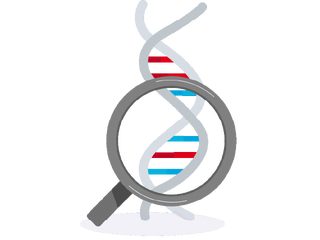
Behind the scenes, your cheek swab is analysed at DKMS Life Science Lab; the world's leading HLA (human leukocyte antigens) typing laboratory to determine your tissue type. This is not the same as your blood group. Instead, it looks at specific genetic markers known as HLA that are used to match donors and patients.
Once your tissue type has been processed, your profile is added to a global registry. This registry is accessed by transplant doctors around the world who are searching for a matching donor for their patients. From that moment on, you become part of a continuous, worldwide search to save a life.
Why finding a match is so difficult
For a patient to receive a stem cell transplant, they need a donor whose tissue type is a very close genetic match. This match needs to be as precise as possible to reduce the risk of complications and give the transplant the best chance of success.
There are thousands of possible HLA combinations, and these vary across different populations and ethnic backgrounds. This means that even with millions of registered donors worldwide, many patients still struggle to find a match. This is also why building a diverse donor registry is so important and why your registration matters more than you might realise.
What your role is at this stage
You are now on the registry, and your profile is being searched whenever a patient requires a transplant. This happens continuously, without you being notified unless you are identified as a possible match.
For some people, a match may be found within months. For others, it may take years. And for many donors, a match may never be found. That doesn’t mean your registration wasn’t important; it simply reflects how specific and complex the matching process is.
When and why we might contact you
Even if you are not yet a match, there are times when we may reach out to you. This could be to:
- confirm that your contact details are still correct
- check your availability
- ask you to complete a health questionnaire
- request an additional cheek swab or blood sample
As science continues to evolve, more information can improve how accurately we match donors and patients. In some cases, we may need to update or expand your existing donor profile to align with newer medical standards. These steps help ensure that if you are ever identified as a match, we can move forward quickly without delays.
Why your commitment matters
Being a registered donor means being prepared even during this quiet period. If you are contacted, it is because your tissue type closely matches that of a patient. At that point, things can move quickly, and your response becomes very important, as a patient’s treatment may depend on your availability and willingness to proceed.
By registering, you’ve already taken an important step. But staying committed is just as important. For many patients, a stem cell transplant is their only chance of survival, and when a match is found, every moment counts. While you are on the registry, we will continue to stay in touch with you through educational content, newsletters, and updates on our impact; if you have given consent to receive these communications. These are designed to keep you informed, engaged, and connected to the lifesaving work you are part of.
If you would like to receive these updates or be more actively engaged, you are welcome to let us know at communications@dkms-africa.org
We also encourage you to keep your contact details up to date, stay informed about the donation process, and remain open to being contacted at any time. You may never be called. But if you are, you could be the one person in the world who can give a patient a second chance at life.


You are registered
There is no set timeline. You may be matched within weeks, months, years, or not at all. This depends on how closely your tissue type matches a patient in need of a stem cell donor.
No immediate action is needed. However, it’s important to keep your contact details updated and stay reachable in case you are identified as a match.
Yes, we may contact you to update your details, request additional information, or improve your donor profile as medical standards evolve.
We also send communications to donors who would like to stay informed about our impact, educational updates, and campaigns. If you are registered and would like to receive these, please email us at communications@dkms-africa.org and let us know that you would like to hear more from us.