
SA Nurses Are on the Frontline of Blood Cancer Detection, But They Can’t Do It Alone
Johannesburg 12 May 2026 - By 2030, South Africa faces a nursing shortfall of between 131,000 and 166,000 nurses, as retiring nurses outpace those qualifying from training facilities.
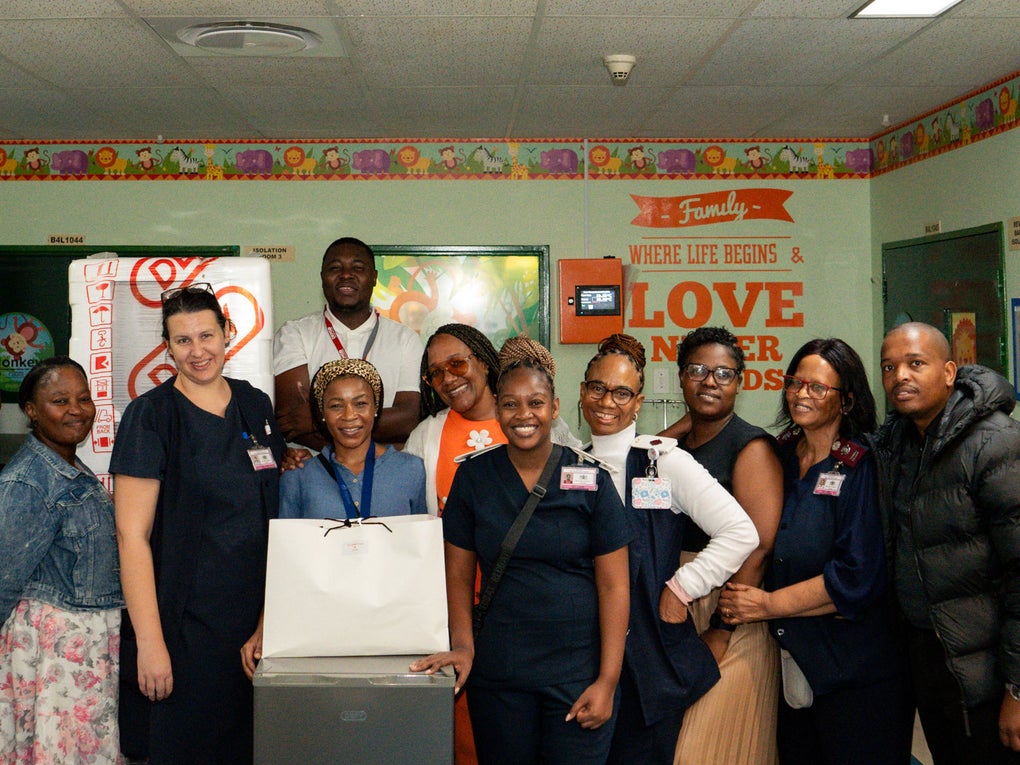
Nurses are often the first healthcare professionals a patient encounters, and their continuous, close presence means they are uniquely positioned to notice subtle changes that others might miss. It is precisely this proximity that makes them so critical in the early detection of blood cancer. "In a country where blood cancer is diagnosed every single hour, their powers of observation can mean the difference between early intervention and a life-threatening delay," says Palesa Mokomele, Head of Community Engagement and Communication at DKMS Africa.
The Problem with Blood Cancer: Symptoms That Hide in Plain Sight
Blood cancer is not like many other diseases. It rarely announces itself dramatically. Instead, it whispers through fatigue that never seems to lift, bruises that appear from nowhere, infections that keep coming back, night sweats that drench the sheets, lymph nodes that quietly swell, and a weakness that becomes impossible to ignore. These are symptoms that patients often dismiss as "just stress" or "just getting older" – and symptoms that, without targeted awareness, can be easily overlooked in a busy clinic.
Research confirms that delays in blood cancer diagnosis can range from 30 days to seven months. In a public health system under significant pressure, the risk of those delays is even greater. Mokomele explains that there is currently no formalised haematology training for nurses in South Africa, meaning that most blood cancer patients are cared for by oncology-trained nurses or general nurses with limited specialist exposure. "Yet without a nurse who knows what to look for, even the clearest warning signs can go unnoticed."
Bridging the Awareness Gap
She adds that closing this gap is not complicated in principle. "Nurses are already there, already trusted, already watching. What they need is the knowledge to connect what they are seeing to what it might mean. Through our Access to Transplant (ATT) programme, we bring that knowledge directly to frontline healthcare workers through community mobilisation workshops and education initiatives focused specifically on the early warning signs of blood cancer. The earlier a diagnosis is made, the sooner a patient reaches transplant, in better condition and with a stronger chance of survival. Every informed nurse is a potential turning point in a patient's journey."
Recognising the People Behind the Diagnosis
International Nurses Day, celebrated annually on 12 May, is an opportunity to reflect on what nurses contribute beyond the clinical. But for Mokomele, recognition must come with action. "Nurses in South Africa are most and in one of the most demanding healthcare environments in the world, carrying patient loads that would overwhelm most, and still showing up with care and attention every single day. What they deserve is not just our gratitude but our commitment to equipping them better. Because when a nurse has the awareness to recognise blood cancer early, they are not just doing their job. They are giving someone a second chance at life."


About DKMS
DKMS is an international non-profit organization dedicated to the fight against blood cancer. It was founded in Germany in 1991 by Dr. Peter Harf and DKMS together with the organization’s over 1,200 employees and has since relentlessly pursued the aim of giving as many patients as possible a second chance at life. With over 13 million registered donors, DKMS has succeeded in doing this more than 115,000 times to date by providing blood stem cell donations to those in need. This accomplishment has led to DKMS becoming the global leader in the facilitation of unrelated blood stem cell transplants. The organization has offices in Germany, the US, Poland, the UK, Chile, and South Africa. The organization has offices in Germany, the US, Poland, the UK, Chile, India and South Africa.
DKMS is also heavily involved in the fields of medicine and science, with its own research unit focused on continually improving the survival and recovery rate of patients. In its high-performance laboratory, the DKMS Life Science Lab, the organization sets worldwide standards in the typing of potential blood stem cell donors.
DKMS Africa received its WMDA certification in 2025, cementing its position as South Africa’s biggest and most diverse stem cell donor registry.


