Sickle Cell Anaemia, a type of Blood Disorder
What is sickle cell anaemia?
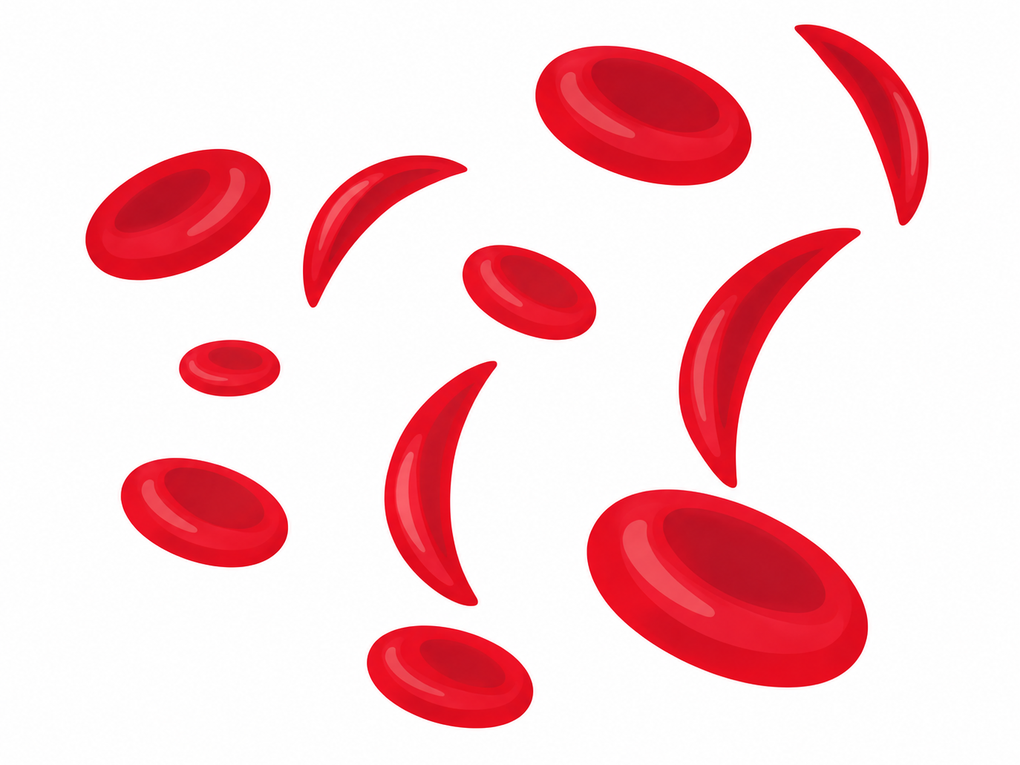
Sickle Cell Anaemia is a disease that changes the shape of red blood cells; the cells in your blood that carry oxygen around your body. Instead of being soft and round, the cells become hard, sticky, and shaped like a “sickle” or banana.
These sickle-shaped cells don’t move easily through the body. They can get stuck in small blood vessels and block blood flow. This causes severe pain, organ damage, and other serious health issues. Unlike normal cells that live for 120 days, sickle cells die early, which leads to anaemia; a constant lack of healthy red blood cells.
This condition is inherited, meaning it’s passed down from parents to children through their genes. The body struggles to make new cells fast enough to keep up, leaving people tired, weak, and vulnerable to serious complications It’s a lifelong condition but can be managed with the right treatment and support.
What causes Sickle Cell Anaemia?
Every person inherits genes from their parents. One of those genes controls how red blood cells are made. In people with sickle cell anaemia, both parents pass down a gene that causes red blood cells to form the wrong shape. If only one parent passes down the gene, the child becomes a carrier; this is called “sickle cell trait.” Carriers usually don’t get sick, but they can still pass the gene to their children.
Sickle Cell Anaemia is most common in people of African descent, including in South Africa.
Symptoms of Sickle Cell Anaemia
People with sickle cell anaemia may have:
- Sudden episodes of severe pain (called sickle cell crises)
- Feeling tired or weak all the time
- Yellow eyes or skin (jaundice)
- Swelling in hands or feet
- Infections that happen often
- Slow growth or delayed puberty in children
- Vision problems
These symptoms can start in early childhood. Some people only feel sick once in a while, while others are affected every day.
How is Sickle Cell Anaemia diagnosed and treated?
How isDiagnosis is through a simple blood test that checks for abnormal haemoglobin, which can show whether someone has sickle cell anaemia or just carries the gene. It’s best to test children early; ideally as babies. There is no easy cure for sickle cell anaemia, but there are treatments to manage symptoms and help people live longer, healthier lives:
- Daily medication to prevent pain and complications
- Pain relief during sickle cell crises
- Regular check ups and blood transfusions
- Antibiotics and vaccines to prevent infections
- A stem cell transplant may offer a cure; but only if a matching donor can be found
How and who it affects in South Africa
Sickle cell anaemia is often underdiagnosed in South Africa, especially in rural and underserved communities. It mainly affects people of African, Indian, and mixed descent, with many children only diagnosed after experiencing a painful crisis or severe symptoms. Awareness of the condition remains low, and many families learn about it only when it becomes serious.
The disease is more common than many realise, particularly among Black, Coloured, and Indian communities. Unfortunately, many people do not know they carry the sickle cell gene, which means children may be born with the condition without early detection. Limited access to testing, care, and education contributes to delayed diagnosis and treatment. Increasing genetic counselling, community awareness, and access to stem cell donor registries can improve outcomes for future generations across South Africa.
Living with Severe Aplastic Anaemia in South Africa
Living with sickle cell anaemia involves daily management to reduce symptoms and prevent complications. People with the condition often experience painful episodes, fatigue, and are more vulnerable to infections, so regular medical check-ups, vaccinations, and taking medications like pain relievers or hydroxyurea are important. Staying hydrated, avoiding extreme heat or cold, and maintaining a balanced lifestyle can also help lessen the frequency of pain crises and other complications.
You can be their hope
A stem cell transplant is currently the only potential cure for sickle cell anaemia. But many South African patients can’t find a matching donor because not enough people of colour are registered as stem cell donors. If more people sign up, more lives can be saved. You could be someone’s match.