
Beyond the Constitution: Making the Right to Healthcare a Lived Reality
South Africa’s Constitution recognises access to healthcare as a fundamental right. It is a powerful commitment. But for many South Africans, particularly those navigating illnesses such as blood cancers and blood disorders, there can still be considerable distance between having a right on paper and experiencing that right in practice.
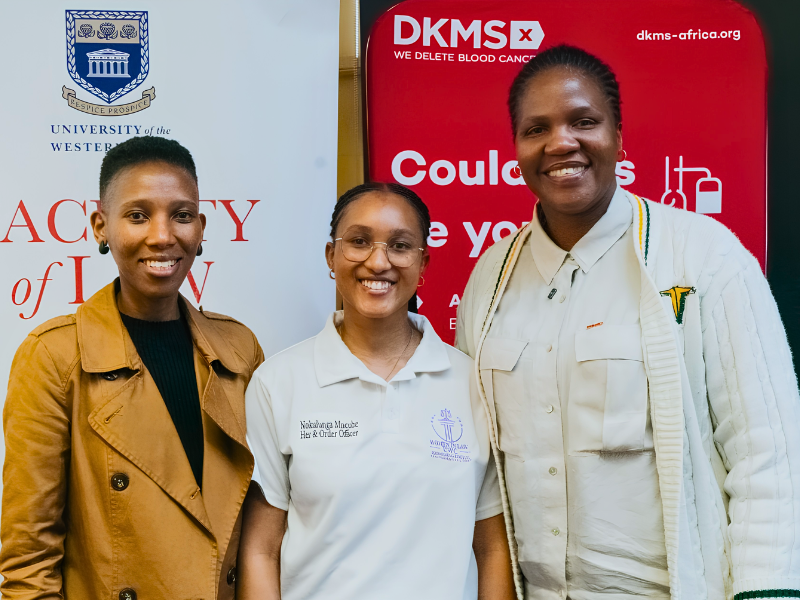
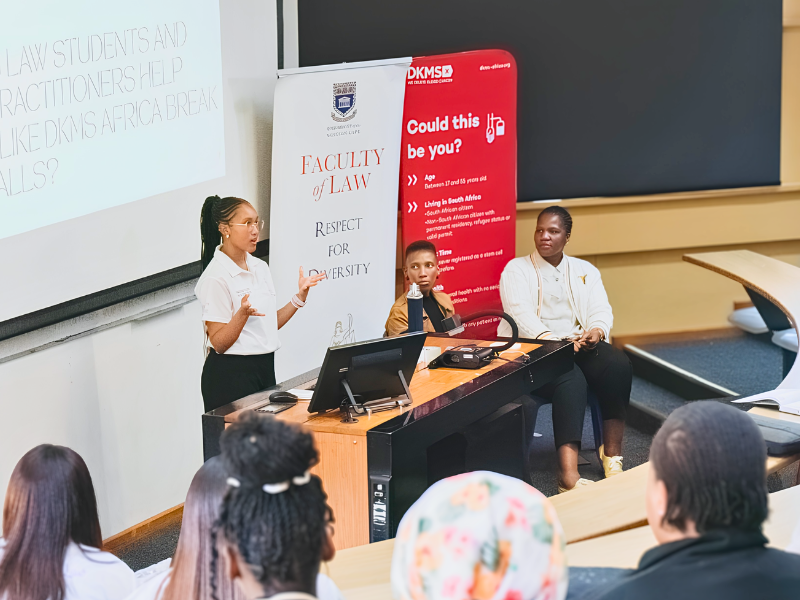
I found myself reflecting on this during a recent panel discussion with future legal practitioners at the University of the Western Cape (UWC), hosted by the Her & Order Subcommittee of Women in Law.
What struck me was the curiosity in the room. The conversation moved beyond what our legal frameworks say and towards a more difficult question: what does meaningful access to healthcare actually look like?
A right on paper must translate into access
Section 27 of the Constitution provides everyone with the right to have access to healthcare services. But healthcare access is not determined by the availability of treatment alone.
For some patients with blood cancers and blood disorders, a stem cell transplant may offer them their best chance of survival. Before that transplant can happen, however, a suitably matching donor must be found.
Stem cell matching is based on genetic characteristics known as human leukocyte antigen (HLA) markers. Because these characteristics are inherited, patients are more likely to find a matching donor among people with similar genetic ancestry.
This presents a very real challenge when certain demographics are underrepresented on donor registries.
For the patient waiting for a transplant, representation is therefore not an abstract conversation about diversity. It can have a direct bearing on the possibility of finding a matching donor.
And this is where I believe conversations about healthcare rights must extend beyond whether a treatment technically exists. We must also interrogate the barriers that determine whether people can realistically access that treatment.
Health equity requires us to look beyond medical facilities
When we talk about healthcare access, we understandably think about hospitals, doctors, nurses, medicines and treatment capacity. But stem cell transplantation demonstrates why our understanding of access needs to be wider.
Five years ago, the DKMS Africa donor registry had approximately 19,000 registered donors, with Black, Coloured, Indian and Asian South Africans significantly underrepresented. Today, the registry has grown to more than 200,000 potential donors, with the majority coming from formerly underrepresented groups.
That progress matters. A larger and more diverse registry gives more patients the possibility of finding a matching donor.
But the battle has not been won.
Finding a donor is one part of a much larger healthcare ecosystem. A patient must first be diagnosed. There needs to be a clear pathway to treatment. The healthcare system needs the capacity and skills to provide that treatment, and patients need to be able to access the medication, nutrition and ongoing care that their circumstances require.
We also need reliable data to understand how many people are affected by particular cancers and blood disorders and where the greatest needs exist.
These challenges become even more important when we consider that the vast majority of South Africans depend on public healthcare facilities.
Healthcare cannot be the responsibility of the health sector alone
The conversation about health equity is therefore multifaceted.
While the Constitution is explicit about the state’s responsibility regarding access to healthcare, the realities of our healthcare system mean that government cannot be the only participant in solving the challenges patients experience.
Civil society, communities, healthcare organisations, educators, the private sector and other professions all have a role to play.
At DKMS Africa, our role is specific. We work to provide as many patients as possible with the opportunity to find a matching stem cell donor. That means building a diverse stem cell registry, educating communities, addressing misconceptions and ensuring that people understand the commitment they make when they register.
But opportunities to advance healthcare access do not only exist within healthcare spaces.
That is precisely why a conversation with law students matters.
We need more voices in the healthcare conversation
Law students may not immediately see themselves as participants in healthcare advocacy. Yet the questions surrounding access to healthcare intersect with constitutional rights, public policy, ethics, privacy, inequality and social justice.
The students at UWC demonstrated what becomes possible when we bring these conversations into spaces where they may not traditionally take place.

It reminded me that addressing healthcare inequality requires us to challenge the idea that it belongs only to doctors, hospitals or government departments.
Future lawyers will interpret rights, influence policy, advocate for communities and help shape the institutions through which those rights are realised. Their understanding of healthcare inequality therefore matters.
The same is true across professions and communities.
Turning rights into lived realities
Our Constitution provides an important foundation for the society we aspire to build. But rights become meaningful when people can experience them in their everyday lives.
For a patient searching for a matching stem cell donor, the debate about healthcare access is deeply personal. Behind the language of equity, representation and constitutional rights is a person waiting for treatment and a family hoping that a path forward exists.
My conversation with the students at UWC reminded me why we need to keep creating spaces where we can interrogate the distance between what should exist and what people actually experience.
The questions young people are asking about healthcare, equity and social justice are important. We should not only answer them; we should invite them into the work of finding solutions.
Because recognising the right to healthcare is only the beginning.
The greater challenge is ensuring that it becomes a lived reality.
About DKMS
DKMS is an international non-profit organization dedicated to the fight against blood cancer. It was founded in Germany in 1991 by Dr. Peter Harf and DKMS together with the organization’s over 1,200 employees and has since relentlessly pursued the aim of giving as many patients as possible a second chance at life. With over 13 million registered donors, DKMS has succeeded in doing this more than 115,000 times to date by providing blood stem cell donations to those in need. This accomplishment has led to DKMS becoming the global leader in the facilitation of unrelated blood stem cell transplants. The organization has offices in Germany, the US, Poland, the UK, Chile, and South Africa. The organization has offices in Germany, the US, Poland, the UK, Chile, India and South Africa.
DKMS is also heavily involved in the fields of medicine and science, with its own research unit focused on continually improving the survival and recovery rate of patients. In its high-performance laboratory, the DKMS Life Science Lab, the organization sets worldwide standards in the typing of potential blood stem cell donors.
DKMS Africa received its WMDA certification in 2025, cementing its position as South Africa’s biggest and most diverse stem cell donor registry.


