
The “someone else will do it” myth is holding back SA’s donor registry
For most of them, the registry is the only place left to look. Only about 30% of patients who need a transplant find a matching donor within their own family, which leaves the remaining 70% depending on a stranger coming forward. Bone Marrow Stem Cell Donation and Leukaemia Awareness Month, which runs from 15 August to 15 October, exists to make sure enough strangers do.
The registry stays small for several reasons, and one of them is a familiar human tendency to assume somebody else has already acted.
Social psychologists have a term for this. They call it the diffusion of responsibility, and it describes the way people feel less personally compelled to act when they believe others could act in their place. In the well-known experiments conducted by researchers John Darley and Bibb Latané, a person who believed they were the only one aware of an emergency intervened around 85% of the time. When they believed four other people were equally aware, that figure fell to roughly 31%. The need was identical in both cases. What changed was each individual's sense that the responsibility was theirs to carry.
On the registry, people imagine plenty of others have signed up, so their own name would barely matter. The registry's numbers show why that reasoning fails. There is no large, dependable pool absorbing everyone who holds back. For most patients, there is barely a pool at all.
The shortage also falls unevenly. Because donor matching is based on inherited tissue characteristics, patients are most likely to find a match among people who share similar genetic backgrounds. That means representation matters: when entire communities are underrepresented on donor registries, patients from those communities can face significantly lower chances of finding a match.
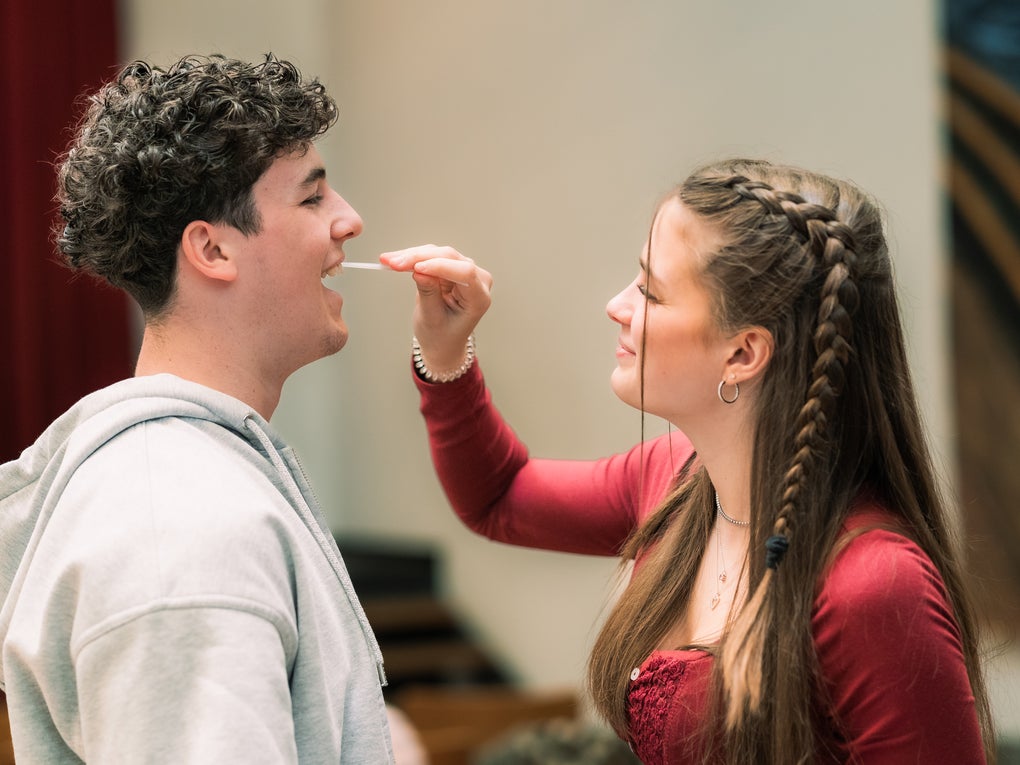
Registering takes only a few minutes, and it is free. A swab kit arrives by post, is completed at home, and is returned the same way. No blood is drawn and no appointment is required. A registered donor is contacted only if they are found to be a match for a specific patient, and the decision to proceed always remains theirs.
Donating, if it ever comes to that, is more straightforward than most people expect. In about 80% of cases the stem cells are collected from the bloodstream in an outpatient procedure similar to giving plasma or platelets, with no surgery and no hospital stay. The remaining cases involve a collection from the pelvic bone under general anaesthetic. Either way, the donor's own cells replace themselves within weeks."
About DKMS
DKMS is an international non-profit organization dedicated to the fight against blood cancer. It was founded in Germany in 1991 by Dr. Peter Harf and DKMS together with the organization’s over 1,200 employees and has since relentlessly pursued the aim of giving as many patients as possible a second chance at life. With over 13 million registered donors, DKMS has succeeded in doing this more than 115,000 times to date by providing blood stem cell donations to those in need. This accomplishment has led to DKMS becoming the global leader in the facilitation of unrelated blood stem cell transplants. The organization has offices in Germany, the US, Poland, the UK, Chile, India and South Africa.
DKMS is also heavily involved in the fields of medicine and science, with its own research unit focused on continually improving the survival and recovery rate of patients. In its high-performance laboratory, the DKMS Life Science Lab, the organization sets worldwide standards in the typing of potential blood stem cell donors.
DKMS Africa received its WMDA certification in 2025, cementing its position as South Africa’s biggest and most diverse stem cell donor registry.
For more information, go to https://www.dkms-africa.org